A chart builder is a tool that turns raw data from databases, spreadsheets and files into interactive charts and graphs without coding. Chart Builder is part of Dashboard Builder: use it to create a single chart or a full dashboard from Excel, CSV, Google Sheets, PDF or any of 25+ databases, with 20+ chart types, a drag-and-drop editor, one-click shareable links and auto-generated PHP/HTML5 code.
Want a chart even faster? Upload your file to the free AI Dashboard Generator and ask for the chart you need in plain English—no sign-up required.
What is a Chart Builder?
A chart builder is a web-based tool that connects to your data (MySQL, PostgreSQL, Oracle, SQL Server and 25+ other database and cloud sources, plus Excel, CSV, Google Sheets and PDF files) and turns it into interactive charts. Chart Builder runs on your own server or in the cloud, and pairs a drag-and-drop editor with a built-in SQL query generator, so you can retrieve complex data and visualize it in minutes without writing code.
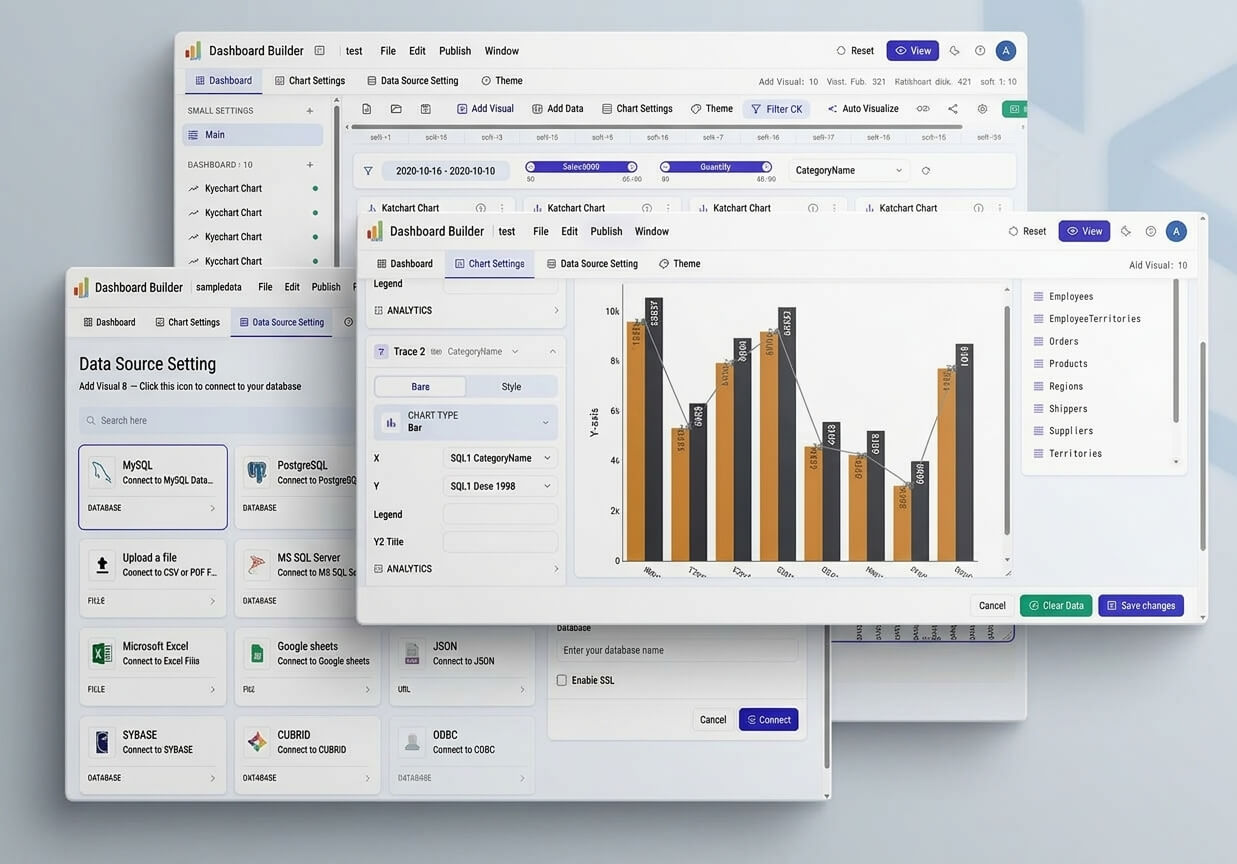
Why Visualize Your Data
Instead of scanning rows in a spreadsheet or scrolling through a database table, a well-built chart shows you the trend, the outlier, and the pattern at a glance. Chart Builder lets you pull data straight from your database or file, plot it on any of 20+ chart types, and share the result as a link, an image, or embeddable code—so the same chart that helps you spot a problem can just as easily go in a report or on a dashboard.

How to Create a Chart (Step-by-Step)
Building a chart with Chart Builder comes down to five simple steps, from connecting your data to publishing the finished chart.
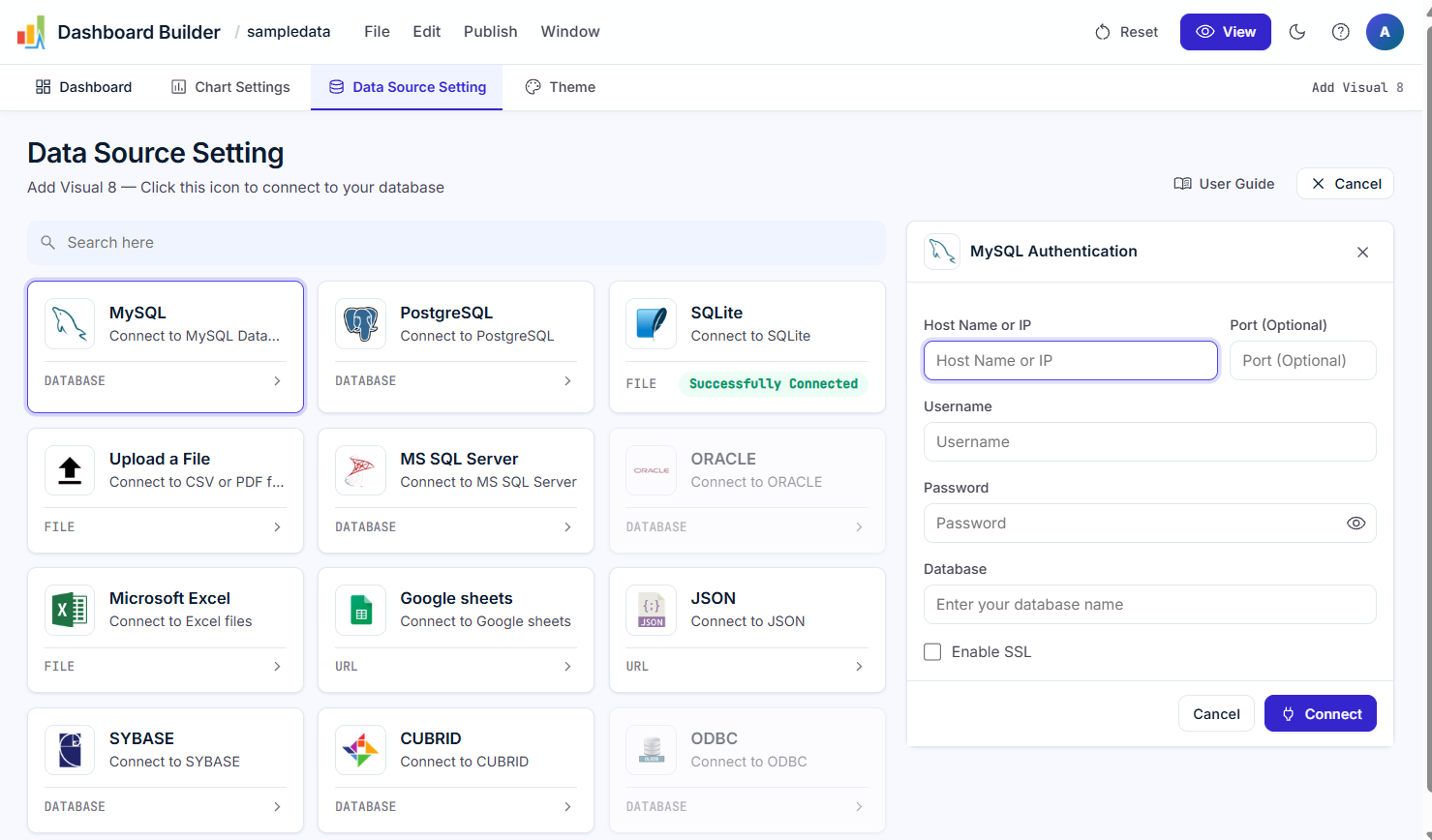
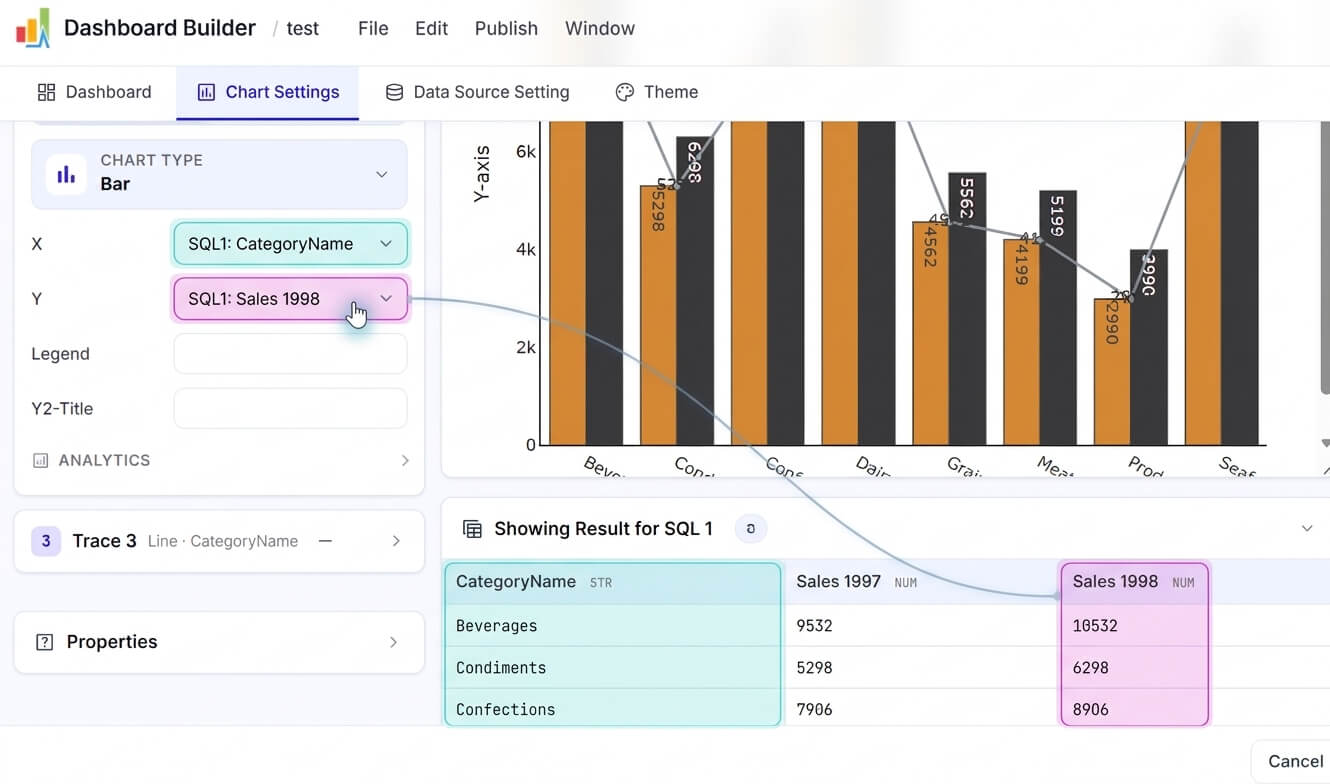
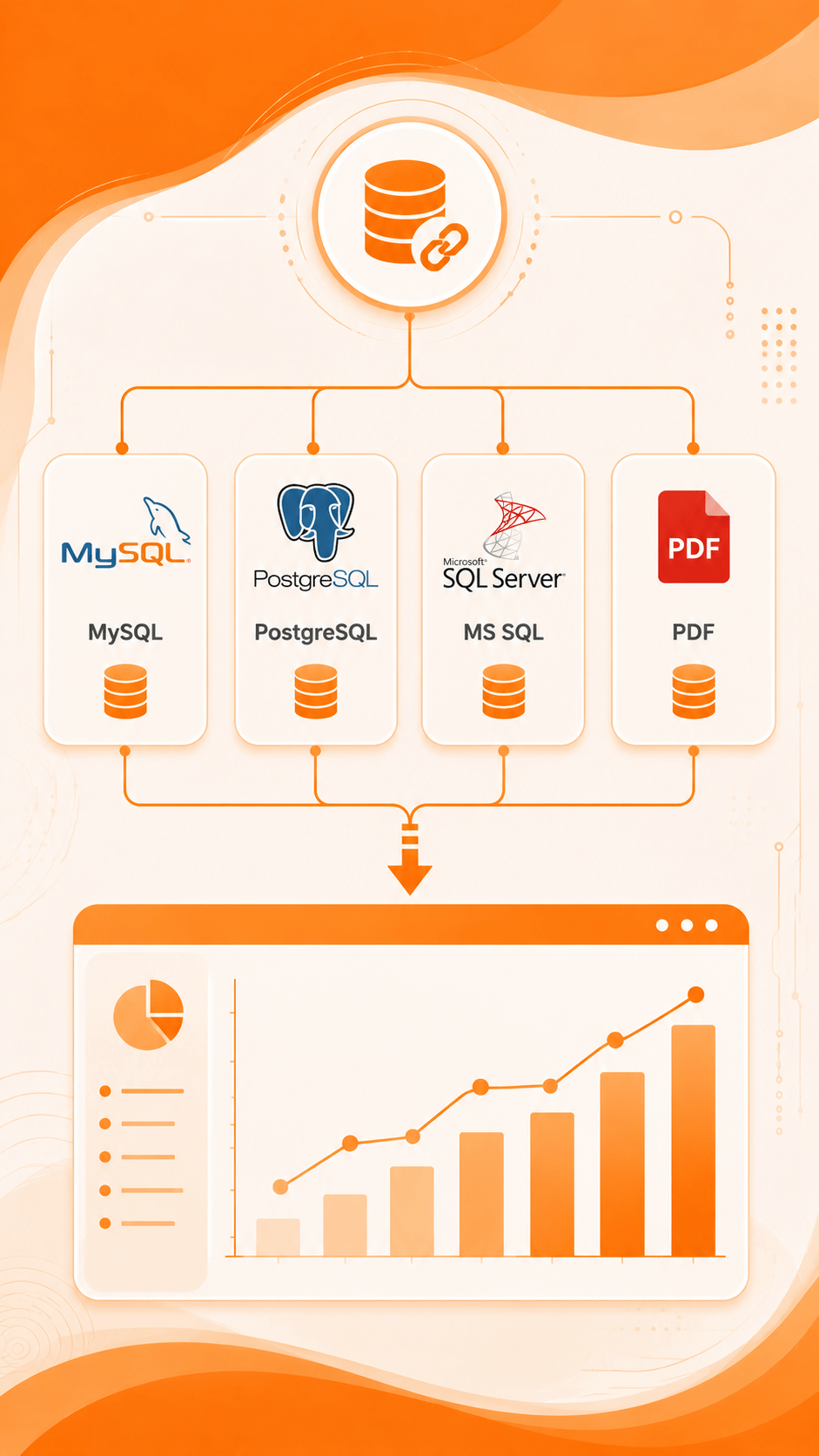
Connect your data source. Chart Builder supports MySQL, MS SQL, SQLite, PostgreSQL, Oracle, Sybase, Cubrid, Excel, JSON, CSV, Google Sheets, and PDF—so you can connect whatever you’re already using.
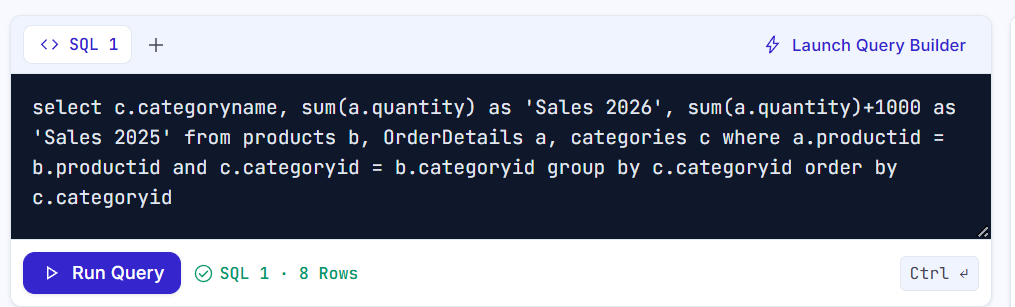
Retrieve your data with the built-in SQL generator. Chart Builder auto-generates SQL statements for you in a few clicks—or write your own custom query if you need full control.
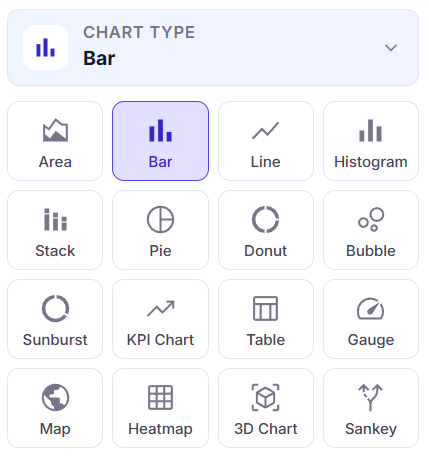
Choose your chart type. Pick from 20+ chart types—line, bar, stacked bar, scatter, area, donut, bubble, gauge, heatmap, choropleth map, or sunburst—based on what best represents your data.
Assign data to the X and Y axis. Drag and drop your retrieved columns onto each axis, then resize and reposition the chart with the visual editor—no code required.
Publish and share. Generate a shareable link in one click (self-hosted or cloud), or export ready-to-use PHP/HTML5 code to embed the chart in PHP, WordPress, Joomla, Laravel, or any custom application.
Ready to build your first chart? Download Chart Builder for free to get started today.
Chart Builder Requirements
The self-hosted version is lightweight and runs on a standard PHP web server. If you’d rather not install anything, use the cloud edition.
Server Requirements
- PHP 7.4 or later
- Apache or Nginx
- Windows, Linux or macOS
Supported Browsers
- Current versions of Chrome, Edge, Firefox and Safari
- Works on desktop, tablet and mobile browsers
To connect to your database and retrieve chart data, make sure your web server is configured to serve the folder containing Chart Builder, and that the web server user can write to the data/ and store/ folders (typically 755 for the folders and 644 for the files inside them). No other folder needs write access. Check your browser console to confirm all Chart Builder files load without errors.
20+ Chart Types Supported
Chart Builder brings all the most widely used chart types together in one place, so you can trace and measure your data from every angle. Choose from 20+ chart types in the chart type drop-down. Here are 11 of the most popular:

Line & Bar Charts
A line chart connects data points to show trends over time—the most common and widely used chart type. A bar chart compares categories using rectangular bars, plotted vertically or horizontally.
Stacked Bar & Scatter Charts
Stacked bar charts compare categories while breaking each one down into parts of a whole. Scatter charts plot two variables against each other using Cartesian coordinates to reveal correlation.
Area & Donut Charts
An area chart is a line chart with the space beneath it filled in color to emphasize volume. A donut chart is a pie chart variation with a hollow center, useful for showing an additional metric.
Bubble & Gauge Charts
A bubble chart is a scatter chart where bubble size represents a third data dimension. A gauge chart uses a needle on a dial—perfect for a speedometer-style KPI on a dashboard.
Heatmap & Choropleth Map
A heatmap visualizes a data matrix using color intensity. A choropleth map shades geographic regions according to a data variable—ideal for regional sales or performance comparisons.
Sunburst Chart
A sunburst chart displays hierarchical data as a series of nested rings, showing how each outer ring (child) relates back to the inner rings (parent categories).
Advantages of Using Chart Builder
1. No Coding Required
The drag-and-drop editor and built-in SQL generator mean you don’t need programming skills or IT assistance to build a chart.

2. Connect Any Data
25+ database and cloud sources—including MySQL, PostgreSQL, Oracle, MS SQL, Excel, CSV, Google Sheets and PDF files and more.
3. Embed Anywhere
Export clean PHP and HTML5 code and embed your chart in PHP, WordPress, Joomla, Laravel, or any custom web application.
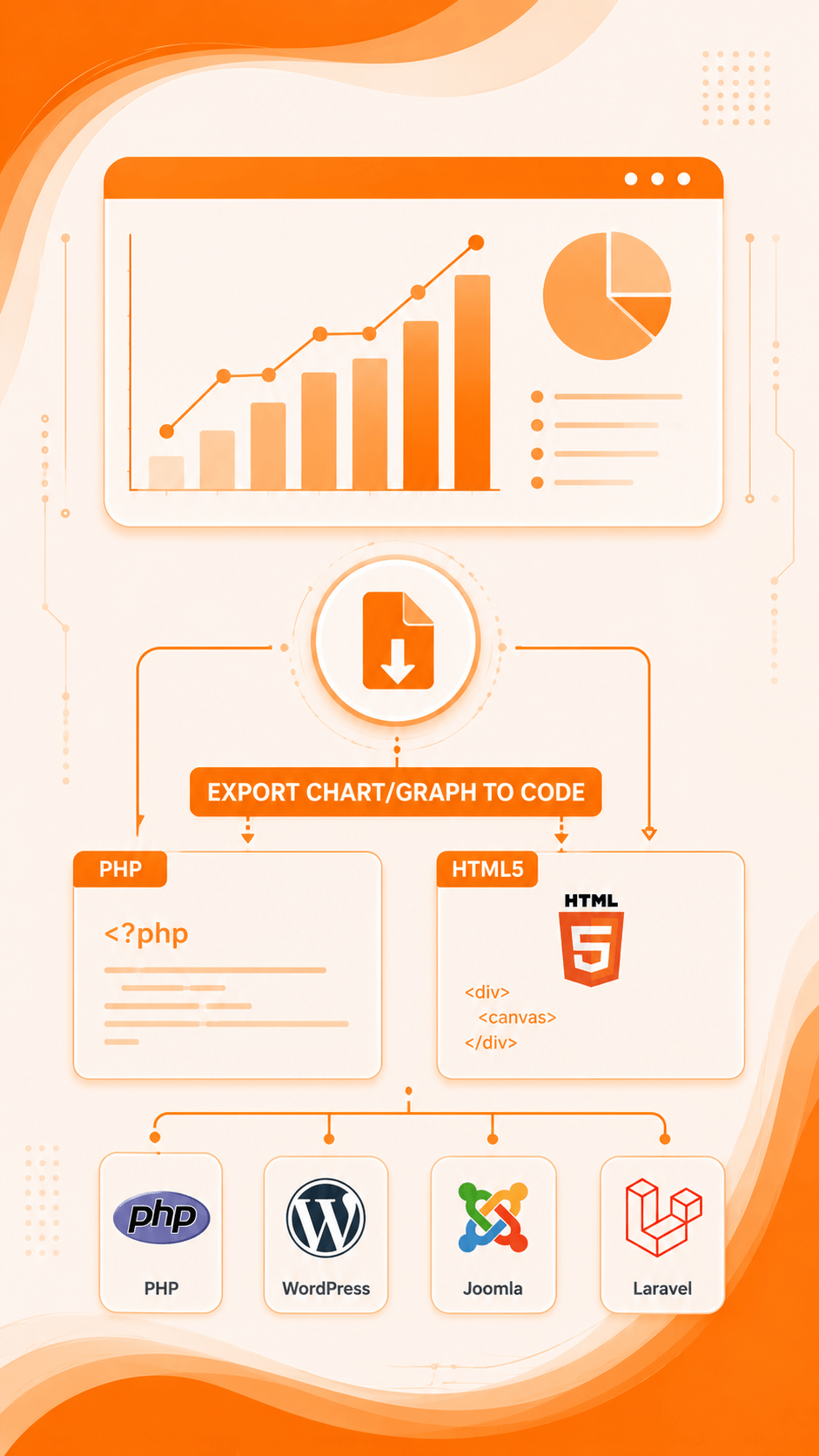
Chart Builder Best Practices
1. Match the Chart to the Data
Use line charts for trends, bar charts for comparisons, and gauge charts for single KPIs—don’t force one chart type to do every job.
2. Keep Queries Focused
Use the SQL generator to pull only the columns you need for the X and Y axis, keeping charts fast and easy to read.
3. Test Before You Publish
Check your browser console for errors and confirm chart data loads correctly before sharing the link or embedding the code.
Publish and Share Your Charts
Publish and share your charts with a single click. In both the self-hosted and cloud editions, Chart Builder generates a shareable URL for any chart you create, so your colleagues can view it instantly—no export or file transfer needed.
Chart Builder also generates ready-to-use PHP source code for every chart in one click. This auto-generated code is published under the MIT license, so you’re free to customize it and embed it directly into your own PHP, WordPress, Joomla, or Laravel application.
Chart Builder Features
Chart Builder provides a full charting toolkit, self-hosted on your own server or in the cloud: