Top 10 Emerging Trends in Analytics and Business Intelligence for 2025: A Look Ahead
As we stand at the brink of a new era, the landscape of analytics and business intelligence (BI) is evolving rapidly, shaping the way organizations derive insights and make data-driven decisions. The year 2024 promises to be a pivotal one, marked by transformative trends that will redefine the analytics and BI space. Let's explore the top 10 trends that are set to drive innovation and elevate the capabilities of businesses in the coming year.

This blog delves into the top 10 analytics and business intelligence trends for 2024 and explores how Dashboard Builder plays a pivotal role in unlocking the full potential of these trends.
1. AI-Powered Analytics
The integration of artificial intelligence (AI) into analytics platforms will reach new heights, enhancing predictive analytics, automating data preparation, and providing intelligent insights. AI algorithms will play a pivotal role in uncovering patterns and trends that may otherwise go unnoticed.
In the realm of AI-powered analytics, Dashboard Builder emerges as a transformative tool, bolstered by its integration with predictive analytics. This dynamic dashboard is propelled by the Dashboard Builder's machine learning engine, available across Windows, Linux, and Mac platforms, delivering a scalable, flexible, and code-free forecasting experience.
The predictive analytics, driven by the Dashboard Builder, aggregates and analyzes historical data to anticipate future outcomes intuitively. Leveraging statistical techniques like data modeling and machine learning, the platform enables users to identify trends, anticipate disruptive industry changes, and make informed, data-driven decisions.
At the core of the predictive analytics functionality lies the application of regression models, specifically the Least Squares Regression Line, which minimizes the vertical distance from data points to ensure the best fit. This technique, integral to regression analysis, visualizes the relationship between data points, providing a robust foundation for forecasting.
Dashboard Builder's Statistical Function within the predictive analytics computes linear trend lines based on given linear data sets, utilizing the least square method for precise predictions. The tool facilitates the creation of highly attractive predictive analytic dashboards effortlessly, requiring no code or programming skills. How does forecasting work within the Dashboard Builder? By utilizing expert techniques and tips, users can craft forecasting dashboards that predict future events based on historical data. Take, for example, predicting sales growth. The forecasting function in the analytics tab allows users to estimate sales values for upcoming months by leveraging known values from historical data, making it a powerful tool for businesses seeking actionable insights.
With easy accessibility requirements, the predictive analytics can be run on PHP Version 7 or later, Apache 2 or later, and JSON-enabled environments. The platform is designed for compatibility with various browsers and is available for free download, making it accessible for businesses looking to enhance their predictive analytics capabilities.
In essence, Dashboard Builder, through the predictive analytics, revolutionizes AI-powered analytics by offering a user-friendly, code-free environment for creating powerful predictive analytic dashboards. Whether predicting sales growth or analyzing complex data from databases, this tool equips businesses with the insights needed for informed decision-making, setting the stage for a data-driven future.
2. Natural Language Processing (NLP) Adoption
The widespread adoption of NLP will empower users to interact with data intuitively, enabling them to ask questions in natural language and receive meaningful insights. This trend will democratize data access, making analytics more accessible to a broader audience within organizations.
Dashboard Builder takes a significant leap forward in the realm of data analytics by seamlessly integrating and facilitating Natural Language Processing (NLP) adoption. In the evolving landscape of business intelligence, where accessibility and user-friendly interfaces are becoming paramount, Dashboard Builder emerges as a game-changer by providing a platform that harnesses the power of NLP to make data analysis intuitive for users across all levels of technical expertise.
Through its user-friendly drag-and-drop interface, Dashboard Builder empowers users to interact with data using natural language, making the process of querying and extracting insights as simple as having a conversation. This transformative capability means that individuals, regardless of their technical background, can articulate queries and receive meaningful responses in a language they understand.
The platform's NLP adoption is underpinned by its ability to aggregate and analyze data in response to natural language queries, enhancing the accessibility of complex analytics processes. By eliminating the need for users to write complex queries or engage in coding, Dashboard Builder significantly lowers the barrier to entry for data analysis, making it accessible to a broader audience within an organization.
The NLP adoption in Dashboard Builder extends beyond mere data querying; it permeates the entire analytics workflow. Users can not only ask questions in natural language but also receive insights and visualizations that are generated based on the context of their queries. This functionality not only streamlines the analysis process but also fosters a more intuitive and collaborative approach to decision-making within teams.
Moreover, the adoption of NLP in Dashboard Builder contributes to breaking down silos between technical and non-technical users, fostering a more inclusive data-driven culture within organizations. By enabling users to articulate their data needs in the language they are most comfortable with, Dashboard Builder democratizes the analytics process, ensuring that valuable insights are not confined to a select few with specialized skills.
In essence, Dashboard Builder's commitment to NLP adoption reflects a strategic move towards making data analytics more accessible, intuitive, and collaborative. By harnessing the power of natural language, the platform not only simplifies the user experience but also catalyzes a shift towards democratizing data analytics, empowering users across diverse roles and skill sets to actively engage in the decision-making process based on insights derived from their data.
3. Embedded Analytics
Embedded analytics is a transformative approach to data analysis, seamlessly integrating data visualization and insights directly into existing applications, workflows, or platforms. It goes beyond standalone business intelligence tools by allowing users to access relevant analytics within the applications they already use, providing real-time insights and enhancing decision-making capabilities without requiring them to switch between different interfaces.
Dashboard Builder plays a pivotal role in facilitating embedded analytics by providing a versatile platform for creating dynamic, interactive dashboards that can be seamlessly embedded into web applications, websites, or other software solutions. Its robust set of features, including a user-friendly drag-and-drop interface and powerful SQL query builder, empowers users to design and customize dashboards tailored to their specific needs.
Through Dashboard Builder's capabilities, organizations can enhance their web presence by integrating visually stunning charts, graphs, and dynamic dashboards directly into their applications. Whether working with PHP, HTML, WordPress, Laravel, or other frameworks, the platform offers the flexibility to generate PHP or Universal HTML code effortlessly, facilitating the smooth integration of analytics into diverse web environments.
Moreover, Dashboard Builder ensures fully responsive dashboards, allowing users to access and interact with data insights on any device, including PCs, tablets, or mobile phones. This adaptability ensures a consistent and user-friendly experience, regardless of the device used to access the embedded analytics.
By leveraging the power of Embedded Analytics with Dashboard Builder, organizations not only streamline their decision-making processes but also provide end-users with a cohesive and intuitive experience. The seamless integration of data-driven insights directly into applications fosters a more efficient workflow, eliminates the need for users to switch between different tools, and ultimately enhances the overall value derived from data analysis. In essence, Dashboard Builder transforms data visualization into a dynamic and integrated component of everyday applications, bringing analytics closer to where decisions are made.
4. Advanced Data Governance and Privacy
As data privacy regulations become more stringent, there will be a heightened focus on advanced data governance tools. Organizations will invest in robust solutions to ensure compliance with global data protection laws, fostering a culture of responsible data management.
Dashboard Builder stands as a cornerstone in ensuring Advanced Data Governance and Privacy with its robust features and commitment to maintaining the integrity and security of sensitive information. In an era where data privacy regulations are increasingly stringent, Dashboard Builder offers organizations a powerful tool to uphold the highest standards of governance and protect user privacy. The platform provides advanced data governance tools that enable organizations to seamlessly control, manage, and monitor access to sensitive data, ensuring compliance with global data protection laws.
Dashboard Builder's intuitive interface extends to its data governance features, allowing administrators to set granular access controls, define roles, and manage permissions with ease. This ensures that only authorized personnel have access to specific data, mitigating the risk of unauthorized usage and safeguarding sensitive information.
Furthermore, Dashboard Builder's commitment to data privacy is evident in its adherence to best practices for secure data handling. The platform facilitates encryption, secure connections, and other industry-standard security measures to protect data during transmission and storage. This comprehensive approach to data security aligns with the stringent requirements of advanced data governance and privacy standards.
Dashboard Builder not only empowers organizations to derive meaningful insights from their data but also provides the necessary tools to uphold the highest standards of data governance and privacy. By integrating these features seamlessly into the analytics workflow, Dashboard Builder ensures that organizations can navigate the complexities of advanced data governance with confidence, fostering a secure and compliant environment for data-driven decision-making.
5. Data literacy
Data literacy is the ability to read, interpret, and derive meaningful insights from data, a skill crucial in today's data-driven landscape. Dashboard Builder plays a pivotal role in fostering data literacy by providing a user-friendly platform that empowers individuals, regardless of their technical background, to engage with and comprehend complex datasets.
The intuitive drag-and-drop interface of Dashboard Builder enables users to create visually compelling dashboards without the need for extensive coding or technical expertise. This ease of use encourages individuals at all skill levels to actively participate in the data analysis process, promoting a culture of data literacy within organizations.
Furthermore, Dashboard Builder's diverse set of visualization options and chart types allows users to represent data in a comprehensible manner. From basic charts to intricate visualizations, the platform caters to different learning styles, making it accessible to a broad audience. Users can customize dashboards to suit their preferences, fostering a more personalized and engaging approach to data exploration.
The platform's commitment to data literacy extends to its educational resources and support, offering tutorials and documentation that empower users to enhance their data analysis skills. By providing these resources, Dashboard Builder not only facilitates immediate data understanding but also contributes to the long-term development of data literacy within an organization.
Moreover, Dashboard Builder acts as a catalyst for improving data literacy by democratizing the data analysis process. Through its user-friendly interface, diverse visualization options, and educational support, the platform empowers individuals to become more proficient in working with data, ultimately enabling organizations to unlock the full potential of their data-driven decision-making capabilities.
6. Data Security
Data security is the practice of safeguarding digital information from unauthorized access, disclosure, alteration, or destruction, ensuring the confidentiality, integrity, and availability of sensitive data. In the context of Dashboard Builder, data security is paramount, and the platform incorporates robust measures to protect the privacy and integrity of user data.
Dashboard Builder employs state-of-the-art encryption protocols during data transmission and storage to prevent unauthorized interception or tampering. By implementing secure connections and encryption standards, the platform ensures that sensitive information remains confidential and protected against potential cyber threats.
Furthermore, Dashboard Builder facilitates secure access control mechanisms, allowing administrators to define user roles, permissions, and restrictions. This granular control ensures that only authorized personnel can access specific data and functionalities, mitigating the risk of data breaches and unauthorized usage. The platform also adheres to industry best practices in data security, staying abreast of evolving cybersecurity standards and regulations. Regular updates and security patches are deployed to address potential vulnerabilities, providing users with a secure and resilient environment for their data analytics activities.
To summarize, Dashboard Builder places a high priority on data security, implementing a multi-faceted approach to safeguard user data throughout the analytics workflow. By combining encryption, access controls, and proactive security measures, Dashboard Builder provides users with the confidence that their sensitive information is protected, allowing them to focus on deriving insights and making informed decisions without compromising data integrity.
7. Data Sharing
Data sharing involves the exchange of information between individuals, teams, or systems to facilitate collaboration and decision-making. In the context of Dashboard Builder, data sharing is streamlined and made efficient, empowering users to disseminate valuable insights seamlessly. The platform provides robust features for sharing dashboards, charts, and visualizations, ensuring that stakeholders have access to relevant information for informed decision-making.
Dashboard Builder allows users to share interactive dashboards effortlessly with team members or external collaborators. Through secure sharing mechanisms, administrators can control access levels, specifying whether recipients have view-only or editing permissions. This flexibility ensures that sensitive information is shared selectively, maintaining data privacy and integrity.
Moreover, Dashboard Builder facilitates data sharing through versatile output options. Users can export dashboards in various formats, such as PNG or HTML, making it easy to share insights through presentations, reports, or embedded web content. This adaptability ensures that data-driven insights are accessible across different communication channels and platforms.
Collaboration is further enhanced by the platform's ability to generate PHP or Universal HTML code, allowing seamless integration of dashboards into web applications. This feature expands the scope of data sharing, enabling organizations to embed dynamic visualizations directly into their websites or software solutions.
In essence, Dashboard Builder streamlines the data sharing process, providing organizations with a versatile and secure platform to distribute insights, foster collaboration, and make informed decisions collectively. Whether for internal team collaboration or external stakeholder engagement, the platform's robust features empower users to share data effectively and drive collaborative intelligence within their organization.
8. Edge Analytics for Real-Time Insights
The shift towards edge computing will accelerate, enabling organizations to analyze data closer to the source. This trend will be crucial for industries requiring real-time insights, such as IoT applications and manufacturing, reducing latency and enhancing decision-making speed..
Dashboard Builder plays a pivotal role in enabling Edge Analytics for real-time insights, offering a dynamic platform that empowers organizations to harness the power of data at the edge of their network. In the era of IoT (Internet of Things) and edge computing, where data is generated and processed closer to the source, Dashboard Builder ensures that organizations can derive immediate insights from this decentralized data..
Dashboard Builder supports real-time streaming and updates dashboards without the need to reload the entire page, ensuring that users receive up-to-the-minute insights. This capability is particularly valuable in scenarios where rapid decision-making based on the latest data is essential, such as in industrial IoT applications, smart cities, or edge computing environments..
Furthermore, the platform's compatibility with HTML5, CSS, and SVG, coupled with its lightweight design, makes it well-suited for edge computing environments with resource constraints. Users can deploy Dashboard Builder on edge devices, ensuring that data analytics and visualization occur directly at the source, minimizing latency and optimizing resource utilization..
Dashboard Builder empowers organizations to implement Edge Analytics seamlessly, bringing analytics closer to the data source. By providing a versatile and responsive platform, Dashboard Builder ensures that real-time insights can be extracted, visualized, and acted upon at the edge, contributing to more agile and data-driven decision-making processes in various edge computing scenarios..
9. Explainable AI for Transparency
As AI models become more complex, the need for transparency in decision-making processes becomes paramount. Explainable AI techniques will be integrated into analytics solutions, providing clear insights into how AI models arrive at specific conclusions, fostering trust and accountability.
Dashboard Builder serves as a cornerstone in promoting Explainable AI (Artificial Intelligence) for transparency, providing users with a clear and understandable interface to interpret and communicate the outcomes of AI models. In the era of complex machine learning algorithms, the platform empowers users to create dashboards that demystify AI-driven insights, making them transparent and comprehensible for a broader audience.
Through its drag-and-drop interface and extensive chart library, Dashboard Builder allows users to visually represent the results of AI models in a transparent manner. By presenting predictions, classifications, or trends in an intuitive format, users can gain a deeper understanding of how AI algorithms arrive at specific outcomes. This transparency is crucial for building trust and fostering collaboration between data scientists, business users, and decision-makers.
Dashboard Builder also supports the integration of AI-generated insights directly into dashboards, enabling users to see the impact of AI-driven recommendations on their data visualizations. The platform facilitates the creation of interactive dashboards that allow users to explore and interrogate AI-driven predictions, enhancing transparency in the decision-making process.
Moreover, Dashboard Builder's commitment to user-friendly design ensures that individuals without extensive technical backgrounds can comprehend and interpret AI results. This democratization of AI insights contributes to a culture of transparency and inclusivity within organizations.
In essence, Dashboard Builder acts as a bridge between complex AI models and human interpretation, facilitating Explainable AI for transparency. By providing a visual and accessible layer to AI-generated insights, the platform ensures that organizations can embrace the benefits of AI while maintaining clarity and transparency in the decision-making process.
10. Personalized and Contextual Analytics
Analytics platforms will increasingly focus on delivering personalized and contextual insights to users. Tailored recommendations and insights that align with individual roles and preferences will become a standard feature, enhancing user engagement and the overall effectiveness of analytics solutions.
Personalized and contextual analytics involve tailoring data insights to individual user needs and providing relevant information based on the specific context of their tasks or roles. Dashboard Builder excels in delivering personalized and contextual analytics by offering a versatile platform that empowers users to create customized dashboards tailored to their unique requirements.
With Dashboard Builder's drag-and-drop interface and a diverse set of visualization options, users can design dashboards that align with their specific data analysis preferences. Whether it's choosing specific chart types, adjusting layouts, or selecting key performance indicators (KPIs), the platform ensures that each user can personalize their analytics environment to suit their workflow.
The platform's ability to integrate with various data sources, including MySQL, MS SQL, PostgreSQL, ORACLE, ODBC, JSON API, CSV, Google Sheets, and more, facilitates the creation of contextual dashboards that pull in data from multiple channels. This contextualization enables users to view a comprehensive picture of their data landscape, making informed decisions within the specific context of their roles or tasks.
Dashboard Builder's support for real-time streaming and updates further enhances the contextual analytics experience. Users receive timely insights that align with the dynamic nature of their tasks, ensuring that the information presented is always relevant and up-to-date.
Moreover, Dashboard Builder's compatibility with different platforms, such as Windows, Linux, and various web technologies, ensures that users can access their personalized and contextual dashboards from any device, providing flexibility and convenience.
Dashboard Builder empowers users to harness personalized and contextual analytics by providing a flexible and user-friendly environment. Through its customization options, integration capabilities, and real-time updates, the platform ensures that individuals can derive insights tailored to their specific needs and work within the relevant context of their roles or responsibilities.
Conclusion
In conclusion, the analytics and business intelligence landscape in 2024 will be marked by a convergence of cutting-edge technologies, a renewed emphasis on responsible data practices, and a democratization of analytics capabilities. Organizations that embrace these trends will be well-positioned to thrive in an era where data-driven decision-making is not just an advantage but a necessity. The future of analytics is here, and it's promising a new frontier of possibilities for businesses across the globe.
Are your Analytics and Business Intelligence Tool ? Try Analytics and Business Intelligence Tool
AI Dashboard: AI-Powered Analytics & Data Visualization
An AI dashboard turns raw data into clear insights using artificial intelligence. Instead of static charts, an AI dashboard analyzes your data in real time, highlights patterns, explains trends, and predicts outcomes. You get faster decisions, better accuracy, and a complete view of your business without manual reporting.
Whether you're tracking KPIs, monitoring operations, or forecasting performance, an AI dashboard gives you the clarity you need to act with confidence.

What Is an AI Dashboard?
An AI dashboard is a data visualization tool that uses machine learning and natural language to automate analysis. It displays live metrics, detects anomalies, and translates complex data into easy insights.
- Businesses use AI dashboards to:
- Reduce manual reporting
- Monitor KPIs in real time
- Predict future trends
- Simplify data analysis
- Improve decision making
You get accurate insights without coding or advanced technical skills.
Why AI Dashboards Matter
AI dashboards play a crucial role in modern businesses by transforming raw data into meaningful insights. Unlike traditional dashboards that only display static reports, AI-driven dashboards continuously learn from data, improving their accuracy over time. They enable organizations to move beyond reactive decision-making to a more proactive approach, anticipating challenges and opportunities before they arise. Whether you're in finance, healthcare, or marketing, an AI dashboard provides a competitive edge by delivering actionable intelligence with minimal manual intervention.
- Automating Data Analysis: Reduces manual effort by analyzing trends and patterns.
- Enhancing Decision-Making: Uses predictive analytics to forecast future outcomes.
- Providing Real-Time Insights: Ensures up-to-date information for immediate action.
- Detecting Anomalies: Alerts users about irregularities or potential risks.
How AI Dashboards Work
1. Connect Your Data
Import files or link your databases and APIs. AI maps and prepares the data automatically.
2. Ask Questions in Natural Language
Type or speak your query.
Example: “Compare monthly sales for the last six months."
3. AI Generates Visuals
Charts, graphs, and metrics update instantly as data changes.
4. Share and Collaborate
Give access to your team with secure permissions.
Build an AI Dashboard in Minutes
- Describe what you want to track
- AI sets up the visualizations
- Customize with natural language
- Publish and share with your team
You get a working dashboard without code.
Key Features of an AI Dashboard
1. Predictive Analytics
By leveraging machine learning algorithms, an AI Dashboard anticipates future trends based on historical data, allowing businesses to stay ahead of the curve. Organizations can use predictive insights for demand forecasting, risk assessment, and strategic decision-making, reducing uncertainty and optimizing operations.
2. Natural Language Processing (NLP)
Users can interact with the dashboard using natural language queries, making data exploration accessible to non-technical users. Advanced NLP capabilities enable voice commands, chatbots, and contextual search, ensuring seamless and intuitive data analysis.
3. Automated Data Visualization
AI-powered dashboards generate intuitive visualizations that adapt to user preferences and data complexity. Dynamic charts, heatmaps, and trend lines update in real-time, providing actionable insights at a glance.
4. Personalized Recommendations
AI-driven insights help users take proactive measures by suggesting the best courses of action. By analyzing user behavior and business patterns, AI dashboards provide customized alerts, strategy suggestions, and workflow automation options.
5. Seamless Integration
An AI Dashboard integrates with various data sources, including CRMs, ERPs, cloud storage, and third-party APIs, ensuring comprehensive data connectivity. This integration allows businesses to consolidate data from multiple platforms, improving efficiency and accuracy.
How AI Dashboards Improve Business Efficiency
1. AI Dashboards in Finance

Financial institutions use AI dashboards to monitor transactions, detect fraud, and forecast market trends. Real-time anomaly detection flags suspicious activity, reducing financial risks and improving compliance with regulatory requirements.
2. AI Dashboards in Healthcare

Hospitals utilize AI-powered dashboards to predict patient outcomes, optimize resource allocation, and enhance diagnostics. AI assists in medical image analysis, patient risk assessment, and personalized treatment plans, improving healthcare delivery.
3. AI Dashboards in Marketing
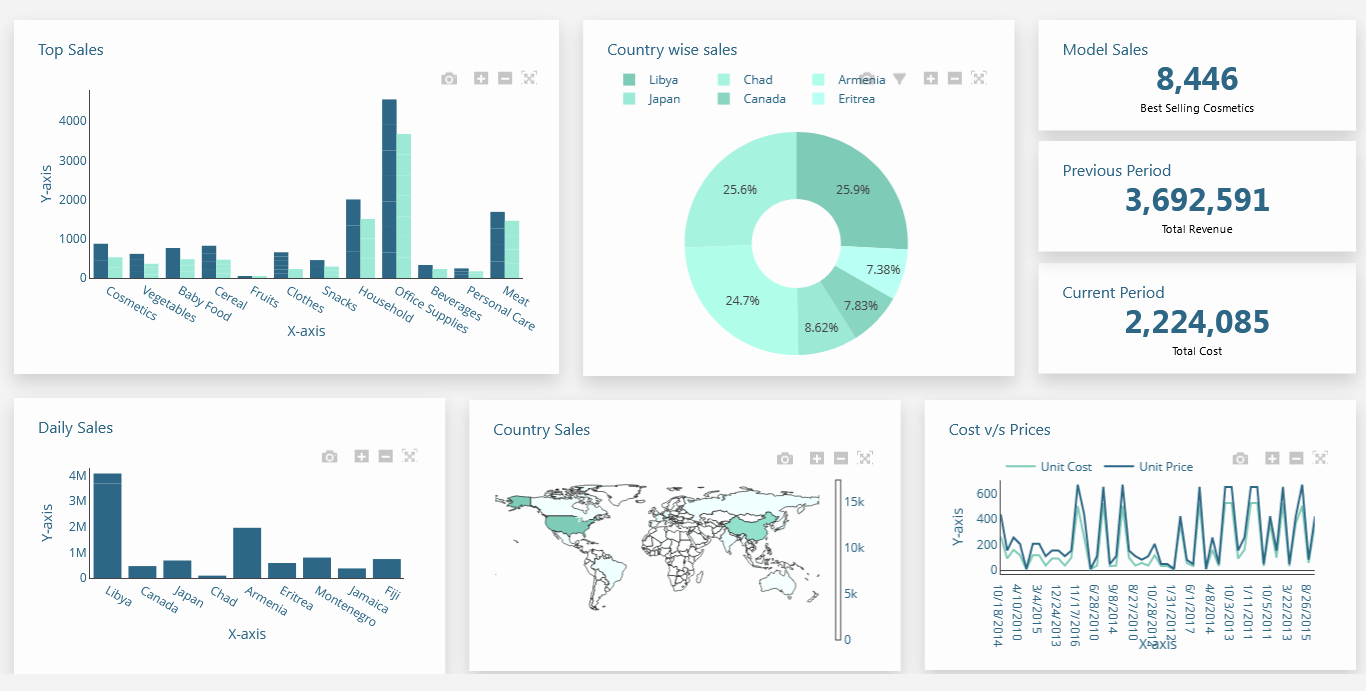
Marketers leverage AI dashboards for customer segmentation, sentiment analysis, and campaign performance tracking. By analyzing consumer behavior, AI provides real-time campaign adjustments, improving engagement and ROI.
4. AI Dashboards in Supply Chain Management

Predictive analytics in AI dashboards help optimize logistics, inventory levels, and demand forecasting. AI enhances supply chain visibility, reducing costs, minimizing delays, and ensuring efficient distribution of goods.
Choosing the Right AI Dashboard
When it comes to AI-powered analytics, Dashboard Builder stands out as the ultimate solution for businesses seeking intelligent, data-driven decision-making. Seamlessly integrating with leading AI technologies such as ChatGPT, Gemini, and DeepSeek, Dashboard Builder transforms raw data into actionable insights with ease.
Unmatched Customization
Dashboard Builder provides unparalleled flexibility, allowing users to tailor dashboards to their specific business needs. Whether optimizing marketing strategies, enhancing operational efficiency, or predicting future trends, its AI-powered capabilities adapt to evolving requirements.
Scalability for Growth
As data volumes grow, businesses require a robust dashboard that scales effortlessly. Dashboard Builder ensures seamless performance, leveraging AI-driven analytics to handle complex datasets, detect patterns, and generate real-time insights without compromising speed or accuracy.
Intuitive User Experience
One of the key advantages of Dashboard Builder is its user-friendly interface. Designed for both technical and non-technical users, it simplifies data interpretation, making AI-powered insights accessible to all decision-makers without the need for deep technical expertise.
Enterprise-Grade Security
Data security is paramount, and Dashboard Builder is equipped with advanced protection measures to ensure compliance and confidentiality. By integrating industry-leading security protocols, businesses can trust that their data remains secure while leveraging AI for smarter decision-making.
For organizations looking to harness the power of AI-driven analytics, Dashboard Builder is the definitive choice. With its advanced AI integrations, scalability, ease of use, and robust security, it empowers businesses to make data-driven decisions with confidence.
Future of AI Dashboards
With advancements in AI and machine learning, AI dashboards will continue to evolve, offering even more sophisticated insights, automation, and interactive capabilities. Businesses that adopt AI-powered dashboards will gain a competitive edge by making data-driven decisions with speed and precision.
Future developments will likely include enhanced predictive analytics, deeper natural language processing for conversational data exploration, and real-time anomaly detection. AI dashboards will integrate seamlessly with IoT devices, enabling real-time monitoring of operational metrics across industries. Additionally, AI-driven automation will reduce manual effort, allowing businesses to focus on strategic growth rather than data processing.
As AI technology continues to advance, Dashboard Builder remains at the forefront, ensuring that organizations stay ahead of the curve with cutting-edge innovations that maximize efficiency, profitability, and decision-making accuracy.
Frequently Asked Questions
An AI dashboard software uses artificial intelligence to analyze data, detect patterns, and present insights through interactive visualizations. Unlike traditional dashboards, it automates analysis, supports natural language queries, and delivers real-time, actionable insights for faster decision-making.
No. Dashboard Builder is designed for both technical and non-technical users. You can build, customize, and explore AI dashboards using natural language prompts without writing SQL, Python, or visualization code.
Yes. The AI dashboard supports connections to SQL databases, CSV and Excel files, cloud storage, and APIs. This allows you to combine multiple data sources into a single dashboard with live updates.
Yes. Teams can collaborate securely on dashboards with role-based access and permissions. Stakeholders can view, edit, or interact with dashboards in real time without version conflicts.
Traditional BI tools rely on manual queries and static reports. An AI dashboard automates data analysis, uses machine learning for predictions, and allows users to interact with data using natural language for faster insights.
Conclusion
An AI Dashboard is not just a data visualization tool—it’s an intelligent analytics powerhouse that transforms raw data into actionable insights. Powered by advanced AI algorithms, Dashboard Builder goes beyond traditional dashboards by automating data analysis, detecting patterns, predicting trends, and providing real-time recommendations. Whether you're in finance optimizing risk assessments, healthcare improving patient outcomes, marketing enhancing customer engagement, or logistics streamlining supply chains, an AI-driven dashboard like Dashboard Builder empowers businesses to make faster, smarter, and data-driven decisions. By leveraging machine learning and predictive analytics, it helps reduce operational costs, boost efficiency, and drive business growth effortlessly.
How helpful was this information?
Ready to experience the power of AI-driven analytics? Explore our AI Dashboard today and unlock smarter decision-making!
Demystifying Business Intelligence and Data Visualization: A Comprehensive Guide to Choosing the Right Tool for Your Business
In the contemporary landscape dominated by data, enterprises of every scale are acknowledging the significance of harnessing data to inform their decisions and secure a competitive advantage. Amidst the abundance of data accessible, the hurdle resides in proficiently scrutinizing and presenting this data to uncover actionable insights. Here is where the role of business intelligence (BI) and data visualization tools becomes paramount.

Choosing the right BI and data visualization tool can significantly impact your business's ability to interpret and act upon data effectively. However, with the multitude of options available in the market, selecting the best tool for your specific needs can be overwhelming. In this guide, we'll demystify the world of BI and data visualization tools, helping you navigate through the options and choose the one that aligns with your business objectives.
Understanding Business Intelligence and Data Visualization:
Before delving into the selection process, it's crucial to understand the fundamentals of business intelligence and data visualization. Business intelligence encompasses the processes, technologies, and strategies used to analyze and interpret data, enabling organizations to make data-driven decisions. On the other hand, data visualization involves presenting data in visual formats such as charts, graphs, and dashboards to facilitate easier comprehension and analysis.
Utilization of Business Intelligence and Data Visualization
Business Intelligence (BI) and Data Visualization tools have become indispensable assets for businesses across industries, offering a multitude of benefits and applications. Here are some key ways in which organizations can leverage BI and data visualization to drive success:

- Informed Decision-Making: BI tools enable organizations to collect, analyze, and interpret vast amounts of data from various sources. By visualizing this data through charts, graphs, and dashboards, decision-makers gain valuable insights into business performance, customer behavior, market trends, and more. This allows them to make informed decisions quickly and effectively, leading to improved operational efficiency and strategic planning.
- Performance Monitoring: BI tools provide real-time monitoring of key performance indicators (KPIs) and metrics, allowing organizations to track progress towards goals and objectives. Visualizing performance data enables stakeholders to identify areas of strength and weakness, pinpointing opportunities for optimization and growth. Whether it's monitoring sales figures, production output, or customer satisfaction scores, BI tools offer a comprehensive view of organizational performance.
- Predictive Analytics: Advanced BI tools leverage predictive analytics algorithms to forecast future trends and outcomes based on historical data. By analyzing patterns and correlations within the data, organizations can anticipate market shifts, identify potential risks, and seize opportunities before they arise. This proactive approach to decision-making enables businesses to stay ahead of the competition and adapt to changing market conditions effectively.
- Customer Insights: BI tools enable organizations to gain deep insights into customer behavior and preferences through data analysis and visualization. By segmenting customers based on demographic, geographic, and behavioral data, businesses can tailor marketing campaigns, product offerings, and customer experiences to better meet individual needs. This targeted approach not only enhances customer satisfaction but also drives customer retention and loyalty.
- Operational Efficiency: Data visualization tools streamline data analysis and reporting processes, saving time and resources for organizations. By automating repetitive tasks and generating interactive visualizations, BI tools empower users to focus on value-added activities such as data interpretation and strategic planning. This improves overall operational efficiency and productivity, allowing businesses to allocate resources more effectively and drive growth.
- Regulatory Compliance: BI tools help organizations ensure compliance with regulatory requirements by providing accurate and transparent reporting capabilities. By consolidating data from disparate sources and generating standardized reports, businesses can demonstrate compliance with regulations such as GDPR, HIPAA, and SOX. This minimizes the risk of non-compliance penalties and reputational damage, safeguarding the organization's integrity and credibility.
Key Considerations When Choosing a BI and Data Visualization Tool:
- Scalability: Consider the scalability of the tool to ensure it can accommodate your growing data needs as your business expands.
- Ease of Use: Look for a tool with an intuitive interface that enables users of all skill levels to easily create and interpret visualizations.
- Integration Capabilities: Choose a tool that seamlessly integrates with your existing data sources and systems to streamline data access and analysis.
- Advanced Analytics Features: Assess the tool's capabilities for advanced analytics such as predictive modeling, forecasting, and machine learning to unlock deeper insights from your data.
- Customization Options: Determine the level of customization offered by the tool to tailor visualizations and reports to your specific requirements and branding guidelines.
- Collaboration and Sharing Features: Evaluate the tool's collaboration and sharing capabilities to facilitate teamwork and knowledge sharing within your organization.
How Dashboard Builder Simplifies Business Intelligence and Data Visualization:
Dashboard Builder stands out as a versatile and powerful tool in the realm of business intelligence and data visualization, offering a range of features that simplify the process of extracting insights from data. Here's how Dashboard Builder can aid in demystifying the complexities of BI and data visualization:
- Intuitive Interface: Dashboard Builder boasts an intuitive drag-and-drop interface that enables users to effortlessly create visually appealing dashboards without the need for extensive technical expertise. This simplicity ensures that users of all skill levels can easily navigate the platform and create insightful visualizations.
- Seamless Integration: Dashboard Builder seamlessly integrates with a variety of data sources, including databases, file formats, and online platforms. This integration simplifies the process of accessing and analyzing data from disparate sources, allowing users to gain a comprehensive understanding of their business operations.
- Advanced Analytics: With Dashboard Builder, users can leverage advanced analytics features such as predictive modeling and forecasting to uncover hidden patterns and trends within their data. By harnessing the power of machine learning algorithms, Dashboard Builder empowers users to make data-driven decisions with confidence.
- Customization Options: Dashboard Builder offers a range of customization options, allowing users to tailor dashboards and visualizations to their specific requirements and branding guidelines. Whether it's adjusting colors, fonts, or layout, Dashboard Builder provides the flexibility needed to create personalized and impactful visualizations.
- Collaboration and Sharing: Dashboard Builder facilitates collaboration and knowledge sharing within organizations by enabling users to easily share dashboards and insights with team members. This promotes transparency and teamwork, ensuring that everyone has access to the same data-driven insights.
Conclusion
In summary, Dashboard Builder plays a crucial role in demystifying business intelligence and data visualization by providing an intuitive platform that simplifies the process of analyzing and visualizing data. With its seamless integration, advanced analytics capabilities, and customization options, Dashboard Builder empowers businesses to unlock the full potential of their data and make informed decisions that drive success.
At the heart of this discussion lies the pivotal role of Dashboard Builder in simplifying the complexities of BI and data visualization. By offering an intuitive platform that seamlessly integrates with various data sources, Dashboard Builder enables users to unlock the full potential of their data and derive actionable insights with ease.
Unlock Data Insights: Explore Advanced Analytics with Dashboard Builder now.
Revolutionizing Data Science and Business Intelligence with Dashboard Builder:
In today's data-driven era, businesses face a constant challenge to efficiently harness the vast amounts of data available to them. Traditional methods of data analysis and reporting often require extensive technical expertise and time-consuming processes. However, with the emergence of advanced tools like Dashboard Builder, the landscape of data science and business intelligence (BI) is undergoing a significant transformation. This article explores the capabilities and implications of Dashboard Builder in revolutionizing data science and BI, highlighting its key features, benefits, and potential impact on businesses across various industries.

About this article:
Explore how Dashboard Builder revolutionizes data science and business intelligence with its advanced analytics, predictive modeling, and seamless integration. Unlock deeper insights effortlessly with intuitive dashboards and ChatGPT API, empowering informed decision-making in the digital age.
Introduction to Dashboard Builder
Dashboard Builder stands at the forefront of the data revolution, offering a comprehensive platform for creating dynamic dashboards that enable users to visualize and analyze data with ease. Powered by a machine learning engine, Dashboard Builder provides statistical insights and predictive analytics to anticipate future outcomes, empowering businesses to stay ahead of the curve.
Business Forecasting with Dashboard Builder's Predictive Analytics
The AI-Driven Dashboard employs AI-driven predictive analytics, a technique that aggregates and analyzes historical data to anticipate future outcomes. While it doesn't offer crystal ball accuracy, it enables users to identify trends, anticipate industry disruptions, and make informed decisions based on data.
Real-World Applications of AI in Dashboard
In the fast-paced landscape of modern business, the ability to anticipate future trends and outcomes is paramount for strategic decision-making. Traditional forecasting methods often rely on manual analysis and intuition, leading to inaccuracies and missed opportunities. However, with the advent of Dashboard Builder's Business Forecasting Dashboard, powered by machine learning (ML) algorithms, businesses now have access to a powerful tool for predictive analytics that can revolutionize their approach to forecasting.
Decoding the Mechanics: How AI-Powered Dashboard Works
The AI-Driven Dashboard employs predictive modeling rooted in statistical science. It assigns weights or scores to specific variables in a dataset, calculating the probability of future events. Utilizing regression modeling, a technique where predictions aren't limited to binary outcomes, the dashboard offers a nuanced approach to predictive analytics.
Streamlined Data Visualization
At the heart of Dashboard Builder lies its intuitive drag-and-drop interface, which allows users to create visually stunning dashboards without writing a single line of code. With a diverse array of chart types and visualization techniques, Dashboard Builder enables users to present complex datasets in a clear and understandable manner, facilitating informed decision-making across all levels of the organization.
Implementation: Using AI for Predictive Analytics in the Dashboard Builder
The Dashboard Builder simplifies the process of creating an AI-Driven Predictive Analytics Dashboard, even for those without coding skills. The linear trend line, calculated using the least square method, ensures accurate predictions based on existing data points.
Seamless Integration with Data Sources
Implementing the AI-Driven Predictive Analytics Dashboard is a straightforward process. The Dashboard Builder web edition has minimal requirements, such as PHP version 7 or later, Apache 2 or later, and enabled JSON. The installation process is simplified with a step-by-step guide, making it available to users with varying technical expertise. The Dashboard Builder is also available in desktop under MS Windows and in the cloud.
Connecting to Database with AI-Driven Dashboard
One of the key strengths of Dashboard Builder is its seamless integration with a wide range of data sources, including databases, file formats, and online platforms. This integration ensures that users have access to the latest data from across their organization, enabling them to gain holistic insights into business operations and performance.
Advanced Analytics and Predictive Modeling
Dashboard Builder goes beyond traditional BI tools by offering advanced analytics capabilities, including predictive modeling and forecasting. By leveraging machine learning algorithms, Dashboard Builder can analyze historical data to identify trends, predict future outcomes, and uncover hidden patterns that drive business success. This predictive capability enables businesses to anticipate market trends, optimize resource allocation, and mitigate risks proactively.
Enhanced Decision-Making with Language Models
Furthermore, Dashboard Builder integrates with advanced language models such as GPT-3, enabling users to extract deeper insights from their data through natural language processing (NLP). By leveraging language models, businesses can ask complex questions, generate detailed reports, and uncover actionable insights that drive strategic decision-making and innovation.
Accessibility and Affordability
Despite its advanced features, Dashboard Builder remains accessible and affordable for businesses of all sizes. With flexible pricing plans and support for multiple platforms, Dashboard Builder democratizes access to data science and BI tools, empowering businesses to unlock the full potential of their data without breaking the bank.
Introduction to Predictive Analytics:
Predictive analytics, a cornerstone of the Dashboard Builder, utilizes statistical techniques and ML algorithms to analyze historical data and forecast future outcomes. By identifying patterns and trends within the data, predictive analytics enables businesses to make informed decisions and mitigate risks.
How Predictive Analytics Works
The Dashboard Builder leverages regression modeling approaches in predictive analytics to generate forecasts. Regression models analyze the relationship between variables and predict numerical outcomes. Using techniques such as the least squares regression method, the Dashboard calculates the linear trend line that best fits the historical data, minimizing the variance and maximizing predictive accuracy.
Regression Models in Action
Unlike binary classification models, regression models predict numerical values, providing a nuanced understanding of future outcomes. For example, in healthcare, a regression model might predict a patient's future BMI based on current data, enabling healthcare providers to tailor interventions accordingly.
Utilizing Dashboard Builder for Forecasting
Forecasting with Dashboard Builder is a straightforward and intuitive process. Users can input historical data into the analytics tab, specify known values for variables such as sales volume and time, and generate forecasts for future periods. The Dashboard automatically calculates the estimated values based on the historical trends, enabling users to anticipate business needs and identify growth opportunities.
Application Example
Predicting Sales Growth: For instance, businesses can utilize Dashboard Builder to predict sales growth for upcoming fiscal periods. By inputting historical sales data and specifying future time periods, the Dashboard generates forecasts for sales volume, enabling businesses to proactively plan inventory, marketing campaigns, and resource allocation.
Leveraging ChatGPT API for Enhanced Data Analysis
The integration of ChatGPT API with Dashboard Builder introduces a transformative solution for data analysis, combining the power of advanced natural language processing (NLP) with intuitive dashboard creation. At the core of this integration lies the state-of-the-art GPT (Generative Pre-trained Transformer) architecture, renowned for its ability to process and generate natural language text with human-like fluency.
Understanding ChatGPT API: Built upon OpenAI's GPT architecture, ChatGPT API harnesses large-scale training data and advanced machine learning techniques to comprehend and generate natural language text. With its contextual understanding and knowledge base, ChatGPT API enables efficient processing and analysis of textual data, unlocking valuable insights hidden within unstructured text..
Efficient Data Analysis Workflow: The integration of ChatGPT API with Dashboard Builder streamlines the data analysis workflow into four key steps:
- Data Input: Users provide textual data to Dashboard Builder for analysis, which can include unstructured text from diverse sources such as customer reviews, social media posts, emails, or any other text-based data relevant to the analysis.
- Text Processing: Dashboard Builder sends the input text to the ChatGPT API for processing. The API tokenizes the text, breaking it down into smaller units such as words or subwords, and encodes it into a numerical format suitable for analysis using the GPT model.
- Analysis and Generation of Insights: ChatGPT API analyzes the processed text using its pre-trained language model. Leveraging its contextual understanding and knowledge base, ChatGPT API identifies patterns, relationships, and key insights within the data, generating valuable insights to drive decision-making.
- Integration with Dashboard Builder: The insights generated by ChatGPT API seamlessly integrate into Dashboard Builder's interface. Users can view the analysis results in various formats, including structured data, visualizations, or natural language summaries, tailored to their preferences and requirements.
Unlocking Deeper Insights: By harnessing the capabilities of ChatGPT API, Dashboard Builder empowers users to extract deeper insights from textual data, enabling them to uncover hidden patterns, trends, and sentiments that traditional analytics may overlook. Whether analyzing customer feedback, market trends, or social media conversations, the integration of ChatGPT API enhances the analytical capabilities of Dashboard Builder, driving informed decision-making and strategic growth.
Conclusion
In conclusion, Dashboard Builder represents a paradigm shift in the fields of data science and business intelligence, offering a comprehensive platform for visualizing, analyzing, and predicting data-driven insights. By leveraging advanced analytics, seamless integration, and language model capabilities, Dashboard Builder enables businesses to make informed decisions, optimize performance, and drive innovation in the digital age. As businesses continue to embrace the power of data, Dashboard Builder stands ready to empower them on their journey towards success.
Unlock Data Insights: Explore Advanced Analytics with Dashboard Builder now.
PostgreSQL Dashboard an overview
PostgreSQL Dashboard is a powerful drag-and-drop utility for creating interactive and dynamic dashboards for PostgreSQL database. PostgreSQL Dashboard fetches data from the PostgreSQL database and creates dashboards without writing SQL queries.